
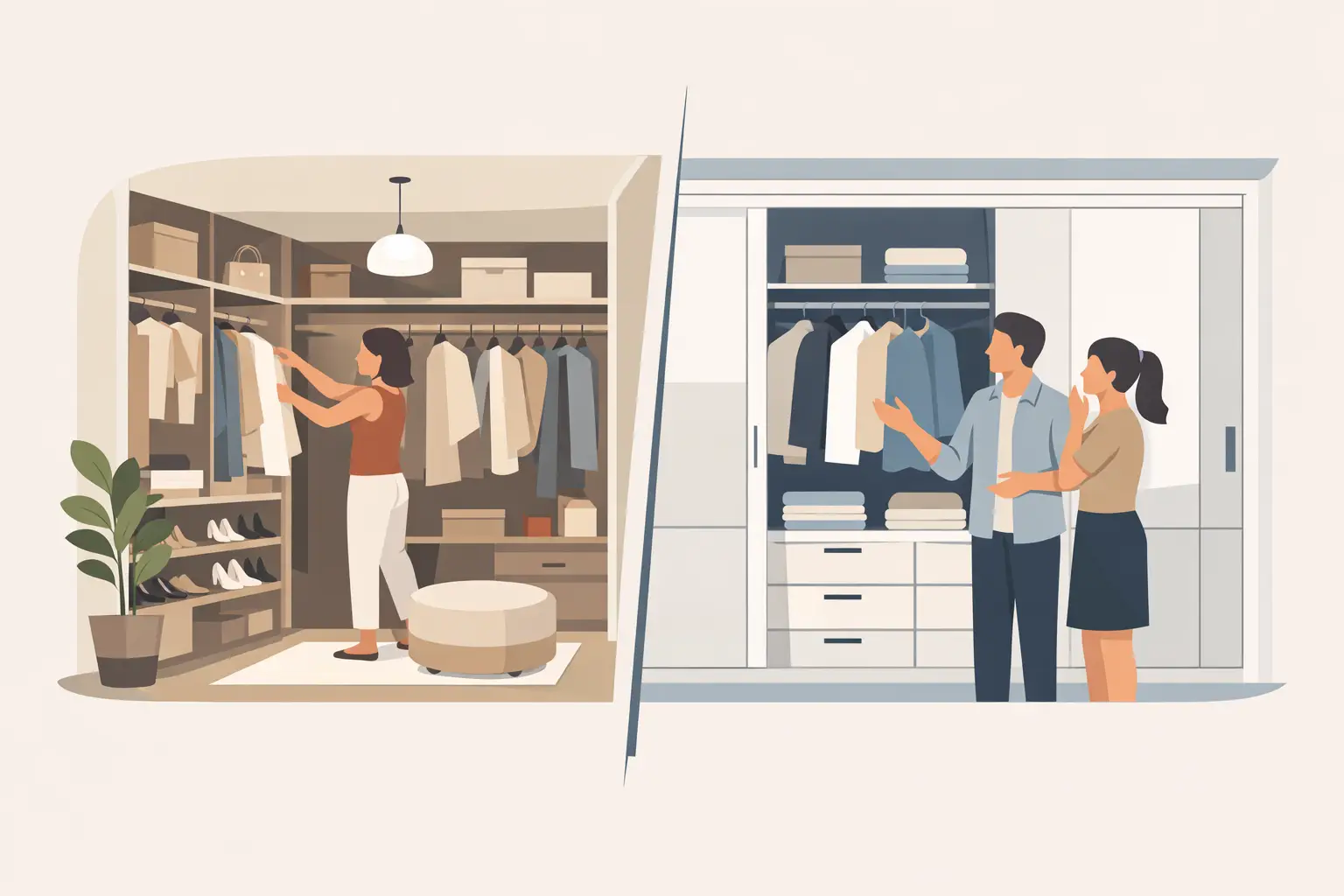
A wardrobe can change the way a bedroom works every day. When weighing up a walk in robe vs built in wardrobe, the better choice is not simply the larger one. It is the one that uses your available room wisely, suits how you get ready, and keeps clothes, shoes and linen easy to find.
For some homes, a walk-in robe creates a calm dressing space away from the bedroom. For others, a carefully designed built-in wardrobe delivers generous storage without sacrificing valuable floor area. Both can be beautifully crafted, designed to last and tailored around the people using them.
Walk in robe vs built in: the key difference
A walk-in robe is a separate area that you can enter, usually positioned behind or beside the main bedroom. It may be a dedicated room, a section created during a renovation, or a passage leading to an ensuite. Storage is typically arranged along one, two or three walls, with room to stand between the cabinetry.
A built-in wardrobe sits within the bedroom itself. It is fitted to a wall, alcove or recess, and usually finished with hinged, sliding or custom wardrobe doors. Because it uses the room perimeter rather than requiring a walk-through zone, it is often the more space-efficient option.
The difference matters because storage capacity is only part of the decision. The layout affects bedroom furniture, natural light, privacy, resale appeal and the cost of the project. A good design starts with accurate measurements and an honest look at how the room is used.
When a walk-in robe is the right choice
A walk-in robe works best when there is enough space to make it comfortable. A narrow room lined with cupboards can feel more like a corridor than a dressing room, particularly if two people need access at the same time. Allowing sensible clearance between opposing cabinets is essential for opening drawers, reaching hanging clothes and moving around without frustration.
For a main bedroom, a walk-in robe can provide excellent organisation. Separate hanging sections mean shirts, dresses, coats and trousers all have an appropriate home. Full-height shelves can take suitcases and seasonal items, while drawers keep smaller clothing protected from dust. Shoe shelves, jewellery drawers, pull-out hampers and integrated mirrors can be included where they will genuinely be useful.
It is also a practical option for couples with different storage needs. One side can be designed for long hanging and shelving, while the other may include more drawers or double hanging. This avoids the familiar problem of one generic wardrobe layout serving neither person particularly well.
There are trade-offs. A walk-in robe uses floor area that could otherwise enlarge the bedroom, ensuite or adjacent room. If it is enclosed, consider lighting and ventilation early in the design. A well-lit robe makes colours easier to see and prevents the space feeling closed in. Where the robe connects to an ensuite, materials and ventilation should also suit the nearby moisture.
When built-in wardrobes make more sense
Built-in wardrobes are a strong choice for standard bedrooms, children’s rooms, guest rooms and homes where every square metre counts. They can run floor to ceiling and wall to wall, turning an awkward recess or unused wall into purposeful storage. Unlike freestanding furniture, there are no dust-catching gaps at the sides or above the unit.
The exterior has a major influence on the room. Sliding doors are useful where bed placement limits clearance in front of the wardrobe. Hinged doors provide a full view of the wardrobe interior and can suit wider bedrooms. Mirror doors can brighten a darker room and remove the need for a separate full-length mirror, while decorative panels can make the cabinetry feel integrated with the rest of the home.
Internally, a built-in wardrobe need not be basic. The right combination of hanging rails, adjustable shelves, drawers and overhead cupboards can hold far more than a single rail and shelf. In a child’s room, adjustable components allow the wardrobe to change as their needs do. In a guest room, shelves for linen and spare blankets may be more useful than extensive hanging space.
A built-in is generally easier to include in an existing home because it does not require a separate room. That does not automatically make it the lower-cost option, however. Door style, internal fittings, finishes, site access and the complexity of the wall all affect the final price.
Start with the room, not the wish list
It is easy to be drawn to large walk-in robes seen in display homes or renovation photos. But copying a layout without considering the room can lead to compromised bedrooms and underused storage. The most successful wardrobe designs respond to the building first.
Consider where the bedroom door opens, where windows sit, and whether there are bulkheads, angled ceilings or power points to work around. Think about the path from the bed to the ensuite, and whether wardrobe doors will conflict with drawers, bedside tables or a laundry basket. In a walk-in robe, the position of the entry matters just as much as the cabinetry arrangement.
Then consider the contents. Count the types of clothes you own rather than guessing. Someone with many long dresses needs a different allocation from someone who mainly wears folded knitwear. If spare bedding, towels or travel bags are currently stored elsewhere, decide whether the wardrobe should accommodate them too. Storage only stays organised when it has enough room for what actually belongs in it.
Storage design that earns its keep
Whether you choose a walk-in or built-in wardrobe, the internal layout determines daily usefulness. Long hanging is ideal for dresses and coats, while double hanging uses vertical space efficiently for shirts, jackets and folded trousers. Deep drawers are useful for bulky items, but shallow drawers can make socks, accessories and smaller clothing easier to sort.
Overhead cupboards are valuable for less frequently used belongings, though they should not become a dumping ground. Open shelves make items visible, while drawers create a neater appearance and reduce dust. A combination is usually the most practical approach.
Good cabinetry should also be made to suit the site rather than forced into standard sizes. Custom joinery can work around skirting boards, uneven walls and ceiling variations, creating a finished result that looks considered from every angle. Quality hardware, durable board finishes and professional installation matter because wardrobe doors and drawers are opened thousands of times over their life.
Budget, value and future plans
A built-in wardrobe can be the more economical way to improve storage in an existing room, particularly when the structure is already suitable. A walk-in robe may involve changes to walls, electrical work, flooring or an adjoining ensuite layout, so it is often part of a larger renovation budget.
That said, the best value is not always the option with the lowest initial figure. A well-planned robe can reduce the need for extra drawers, shelving units and bedroom furniture. It can also make a main bedroom feel more orderly and enjoyable to use. If you are renovating for the long term, choose a layout that will still work if your wardrobe needs change over time.
At T&T Wardrobes, every design is measured around the home and the household, with custom manufacturing and professional installation backed by a 10-year warranty. That process helps avoid common issues such as unusable corners, insufficient hanging space and doors that do not suit the room.
Choosing with confidence
Choose a walk-in robe when your floor plan can provide a comfortable dressing area without compromising the bedroom, and when detailed organisation is a priority. Choose a built-in wardrobe when you want efficient storage within the bedroom, a clean fitted look, or a practical solution for a smaller room.
There is no universal winner in the walk in robe vs built in decision. A thoughtful design, quality materials and an internal layout shaped around your belongings will serve you better than extra square metres alone. Begin with the way you live, and the right wardrobe will make space for it.
Contact us for expert design consulation and quote.